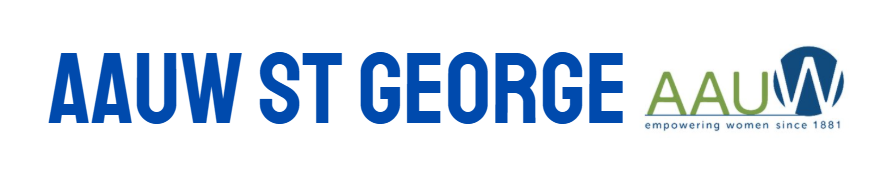
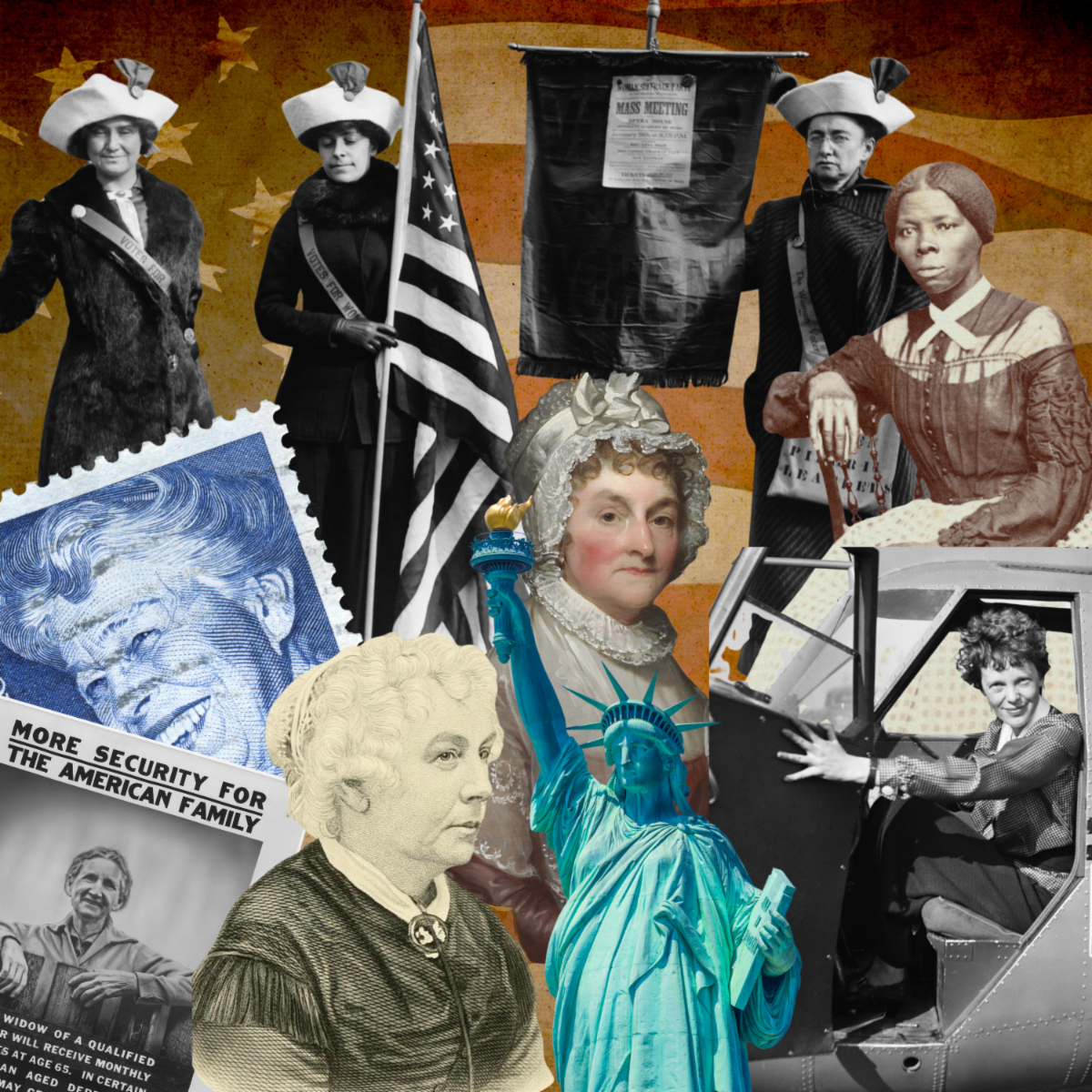
| Celebrating 250 years of women! As we celebrate our nation’s 250th anniversary, it’s important that we look back at the advancement women have enjoyed and the achievements to which they have contributed. Carrie Lukas, Independent Women president, sums it up better than I can. She references women’s history month, which was June, but this is equally applicable now.“As we celebrate our nation’s 250th anniversary, it’s more important than ever to recognize the brave women who were a part of our country’s founding and then women who continue to fight today to protect our rights and build a better and stronger country. Women can also consider the incredible role that the United States has had in unleashing opportunities for women, both here at home and as an example for the rest of the world. American women are truly the most fortunate women on the planet. America’s 250th makes this women’s history month more important than ever.” |
 |
| Project 2025 and women It seems appropriate given this 250th anniversary celebration and in spite, or perhaps because of the gains made by women, that we look at Project 2025 and what that might hold for the future of women and girls. Project 2025 is a long-term policy blueprint led by the Heritage Foundation, a Washington-based think tank. It was released ahead of the 2024 presidential election and outlined how its priorities could be achieved with an administration that supported its goals. It is not a binding government document and has not been formally adopted as federal policy. Given the size of the Project 2025 document, we will just look at a few issues that pertain to women and girls. This information is provided by Women’s Rights Data Initiative. You are encouraged to look at their website for more details. |
 |
| Reproductive health and bodily autonomyExpanding federal oversight and data collection related to abortion, including expanding mandatory state reporting requirements and using federal funding mechanisms to encourage compliance.Using federal health care funding rules, including Medicaid policy, in ways that could restrict support for providers or states that seek to protect or expand abortion access.Reinterpreting existing federal laws and regulations—including those related to medication approval and distribution—in ways that could sharply limit medication abortion and increase legal risk for providers.Federal agencies and enforcement of women’s rights. Pulling back on proactive federal enforcement, placing more responsibility on individuals to initiate and pursue complaints themselves.Narrowing how discrimination protections are interpreted, including protections related to pregnancy, caregiving, and sex-based harm.Reducing or restructuring offices within federal agencies that are responsible for civil rights enforcement.Education policy and student protectionsLess federal involvement in how schools handle discrimination and harassment complaints.Lower expectations that schools act proactively to prevent gender-based harm. More responsibility shifted to state and local systems, where enforcement and responses can vary widely.Family policy and caregivingPrioritizing marriage-based family structures in federal policy design and benefits, rather than broader caregiving arrangements.Scaling back or limiting the role of federal social support programs related to childcare, family assistance, and caregiving.Emphasizing parental control over public systems, including education and child-related services, as a guiding policy principle. |
| Why this mattersProject 2025 doesn’t change the law on its own. What it does is outline how executive power could be used to shape how laws are interpreted, enforced, and experienced. |
| Keeping up with Utah Women and Leadership Project and A Bolder Way Forward is a great way of knowing what’s happening with women’s issues. Here is some information from UWLP and ABWF you may find useful. Latest Research: The UWLP has published 6 new research reports. We’ve released a new white paper today on The Roots of Sexual Violence in Utah: A Framework for Understanding Harm. Other new reports include:Eleven Major Challenges Utah Girls and Women Face: A 2026 UpdateUtah Women and Skilled TradesSeven Top Opportunities for Utah Girls and Women: A 2026 UpdateThe Current Status of Utah Women & Girls: A 2026 Research SynopsisNew American Women (Immigrants and Refugees) in Utah Local Updates: Grassroots work continues at the county level, with regions being an important part. Counties are now organized into seven regions and supported by part-time UWLP regional coordinators who help with connections, partners, social media, and consistency, and are a resident of the region. Read the quarterly BWF Regional Coalition Update to learn more. Podcasts: We’re wrapping up our Fall Survey reporting with new podcast episodes featuring insights from the 2025 data. Listen in as Dr. Madsen, Spoke Advisors, and other leaders discuss Domestic Violence & Poverty and Homelessness, Higher Education Attainment & K-12 Initiatives, STEMFields & Leadership Development, Finance & Home and Family, Health Across the Lifespan, Male Allyship, and Political and Civic Representation. Research Opportunity: The Utah Women & Leadership Project at Utah State University is conducting a confidential study on how faith communities support—or fail to support—women during times of crisis or trauma (USU IRB 16107). Women (18+) who have experienced sexual assault, domestic violence, divorce, or another major life disruption while participating in a faith community may choose to participate. If you are interested, you can take a brief screening survey, or learn more by contacting Dr. Susan R. Madsen (susan.madsen@usu.edu). |
| More on book bans Washington County School District officials allowed ‘informal’ complaint process open to abuse by activists “Lucky” by Alice Sebold – 35th book to be banned |
 |
| The 2026 mid-term election is quickly approaching.Are you prepared?Did you or others you know miss the June 12 deadline to register for mail-in voting? In order to participate in same-day voter registration, Utahns must be a U.S. citizen, 18 years old by June 23, a resident of Utah for 30 days and not currently imprisoned for a felony conviction — just like standard registrants.16- and 17-year-olds may preregister to vote, but they must be 18 to vote.College students from other places may register to vote either at their home address or their college address — just one. To participate in same-day voter registration, they must be Utah residents or intend to become residents of Utah. Find more information about the eligibility requirements for voting in Utah here.Utahns who are unsure of their registration status can check it here.When Utahns register to vote on election day, they do not receive a standard ballot, but a provisional one. A provisional ballot allows the new-registered voter to vote, but requires they present additional information at the polls. In order to participate in same-day voter registration, you’ll need to bring: 1) a primary form of unexpired photo ID and 2) proof of residence.A photo ID could be:A Utah driver’s license.A state or U.S. government-issued ID card.A Utah concealed carry permit.A U.S. passport.A U.S. military ID card.A tribal ID card. When bringing a passport or a U.S. military ID card, a same-day voter — or often called a provisional voter — must also supply an additional proof of residency, which can include:A check issued by the state or federal government with your Utah address on it.A hunting or fishing license with your Utah address on it.A Bureau of Indian Affairs card.A Medicaid, Medicare or EBT card with your Utah address on it.Any current ballot ID cards issued by a local government, employer or other organization.A record for vehicle registration in Utah.A bank statement with your Utah address on it.Contact your county clerk office if you can’t find one of these forms of proof of residency and need to explore other options.You have a week after Election Day to provide evidence proving residency. |
Your St. George AAUW public policy team appreciates your interest in issues that affect women and girls and your efforts to ensure that the future is bright.
Don’t forget to visit AAUW National’s “Two-Minute Activist” to take action on important issues at the national level. We’ve witnessed so much success over these 250 years. Let’s be part of making the next 250 years in this country something that benefits women and girls even more!
Lisa RutherfordPublic Policy Chair
Leave a Reply